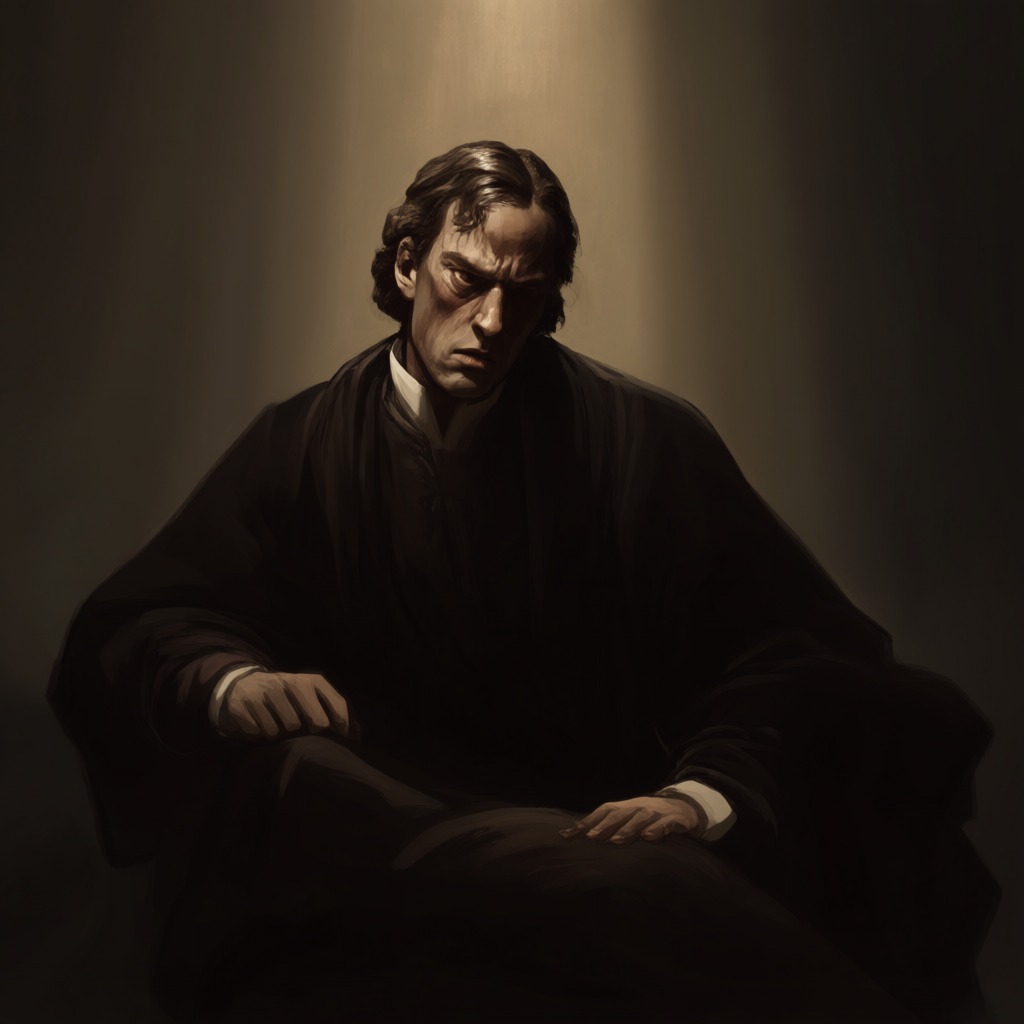
the treasure crypt
The treasure crypt of the abbey is a subterranean vault located beneath the main altar of the church, accessible by a small ladder behind the altar. It houses the monastery's immense collection of relics, precious liturgical objects, and curiosities from distant lands. The crypt embodies the abbey's temporal wealth, spiritual prestige, and the tension between evangelical poverty and institutional power that lies at the heart of the novel's theological debates. It is a space where the material splendor of the Benedictine order is displayed in its most concentrated form, and where the abbot's pride in his abbey's riches is most openly expressed.
Location and Description
The crypt is a room with a very low vaulted ceiling supported by thick rough-stone columns. It is a place of which the abbot is very jealous, allowing it to be opened only under exceptional circumstances and for very important visitors. When Adso first enters, he is guided by Nicholas of Morimondo, the master glazier who has been put in charge of supervising the polishing of the glass cases there. The crypt is illuminated by torches held by Nicholas's trusted assistants, and on every side are cases of different dimensions containing objects of wondrous beauty.
The Relics and Treasures
The crypt contains a vast array of relics and precious objects. Among them are the tip of the spear that pierced the side of Christ, kept in a golden box with a crystal lid; a piece of the venerated wood of the holy cross, brought to the abbey by Queen Helena herself; a nail of the cross in a case of aquamarine; a portion of the crown of thorns in an ampoule; a shred of the tablecloth from the Last Supper; the purse of Saint Matthew; a bone from Saint Anne's arm; a piece of the manger of Bethlehem; a hand's length of the purple tunic of Saint John the Evangelist; links from the chains that bound the apostle Peter in Rome; the skull of Saint Adalbert; the sword of Saint Stephen; a tibia of Saint Margaret; a finger of Saint Vitalis; a rib of Saint Sophia; the chin of Saint Eobanus; the upper part of Saint Chrysostom's shoulder blade; the engagement ring of Saint Joseph; a tooth of John the Baptist; Moses's rod; and a scrap of lace from the Virgin Mary's wedding dress. The crypt also holds curiosities from distant lands: a stuffed basilisk and hydra, a unicorn's horn, an egg found inside another egg, a piece of manna, a whale's tooth, a coconut, an elephant's tusk, and the rib of a dolphin. There are also phials containing the charred remains of the city of Sodom and mortar from the walls of Jericho.
Narrative Significance
The treasure crypt serves as a powerful counterpoint to the debates on poverty that dominate the novel's theological discussions. When Adso visits the crypt, he is overwhelmed by the dazzling beauty of the objects, and the abbot, Abo, uses the occasion to deliver a lengthy discourse on the spiritual value of material splendor. The abbot argues that precious materials like gold and gems are lights that reveal the divine power of creation, and that the beauty of the sacred vessels is a legitimate form of homage to God. This stands in stark contrast to the Franciscan ideal of poverty championed by William of Baskerville and Ubertino of Casale. William, observing the crypt, remarks to Adso that it is "a beautiful epitome of the debates on poverty you have been following these past few days" and that it explains "why your brothers make mincemeat of one another as they aspire to the position of abbot." The crypt thus becomes a physical symbol of the institutional wealth and power that the Spiritual Franciscans sought to renounce, and a reminder of the worldly stakes underlying the theological conflict. The crypt also appears in Adso's dream-vision, where the fragments of the girl's body are mingled with the relics, suggesting a connection between the violence of the crimes and the material treasures of the abbey.